 Airdrie
  Banff
Banff  Beaumont
  Brooks
  Calgary
  Camrose
  Canmore
  Chestermere
  Cochrane
  Drumheller
  Edmonton
  Fort McMurray
  Fort Saskatchewan
  Grande Prairie
  High River
  Leduc
Leduc  Lethbridge
  Lloydminster
  Medicine Hat
  Okotoks
  Red Deer
  Rocky Mountain House
  Sherwood Park
  Spruce Grove
  St. Albert
  Stony Plain
  Sylvan Lake
  Whitecount
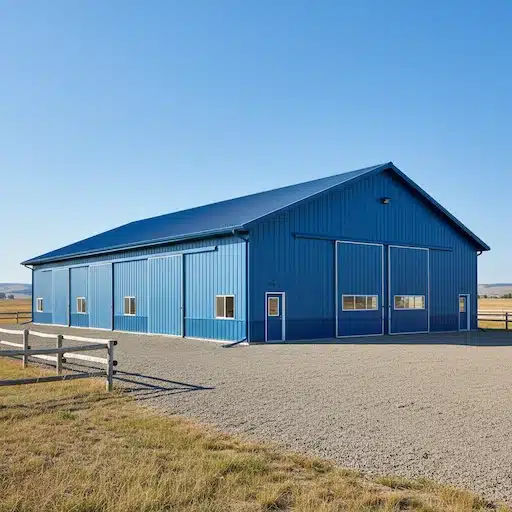


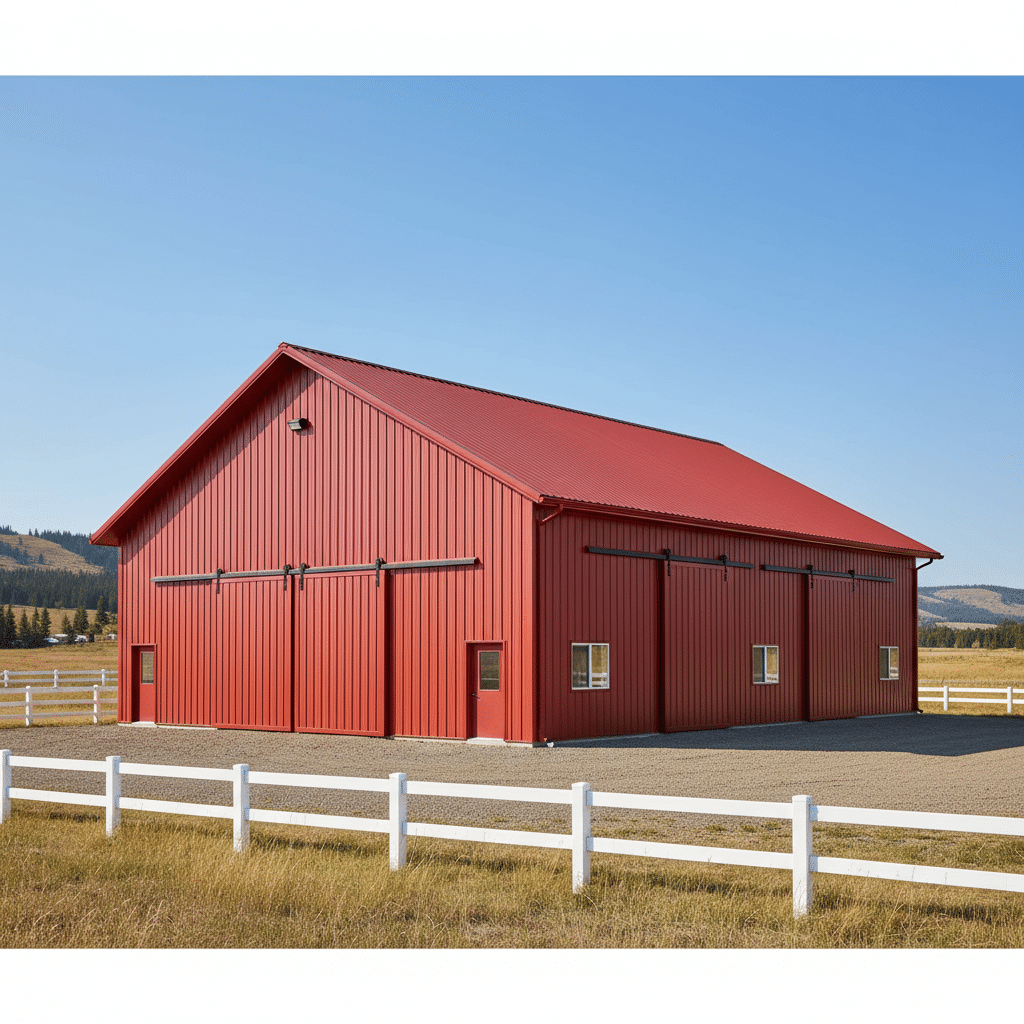


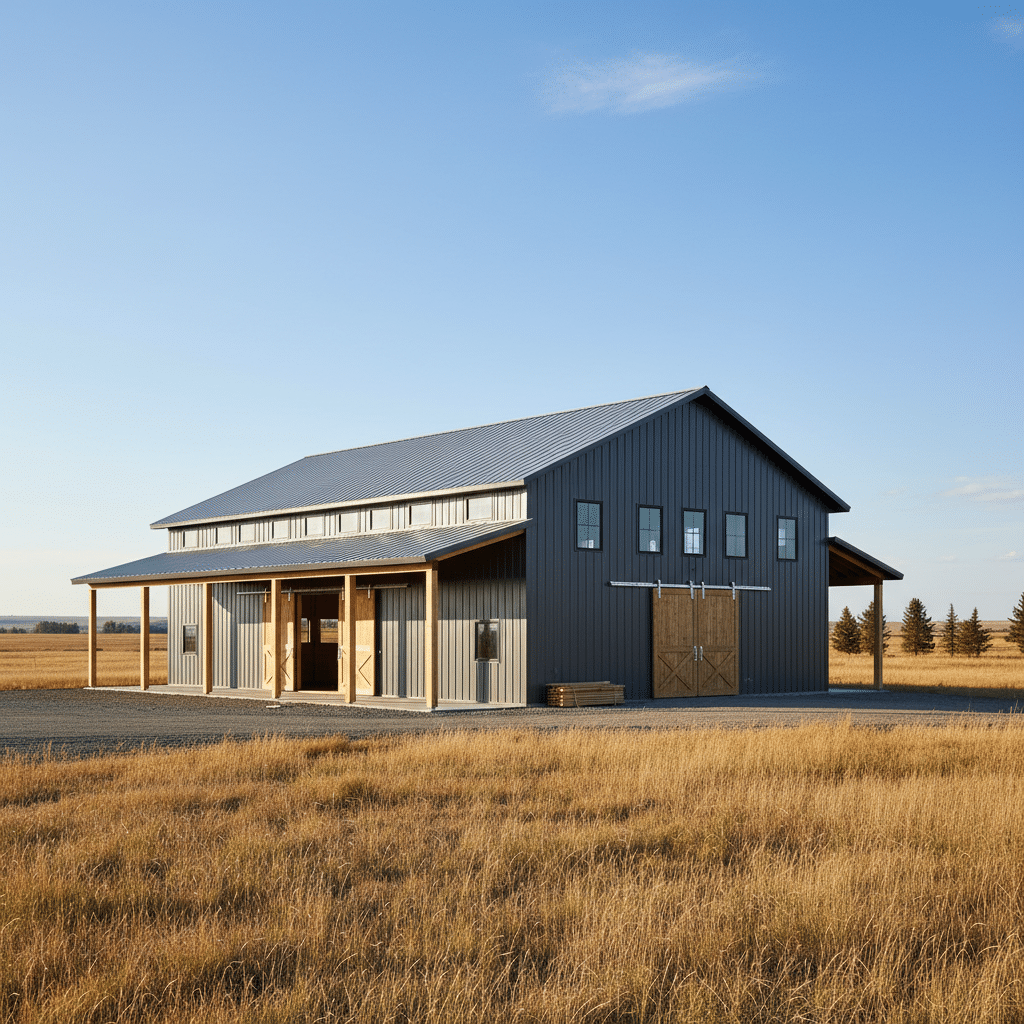



Post-Frame Equestrian Buildings Designed for Horses, Riders, and Long-Term Performance
Common Equestrian Facility Types and Configurations
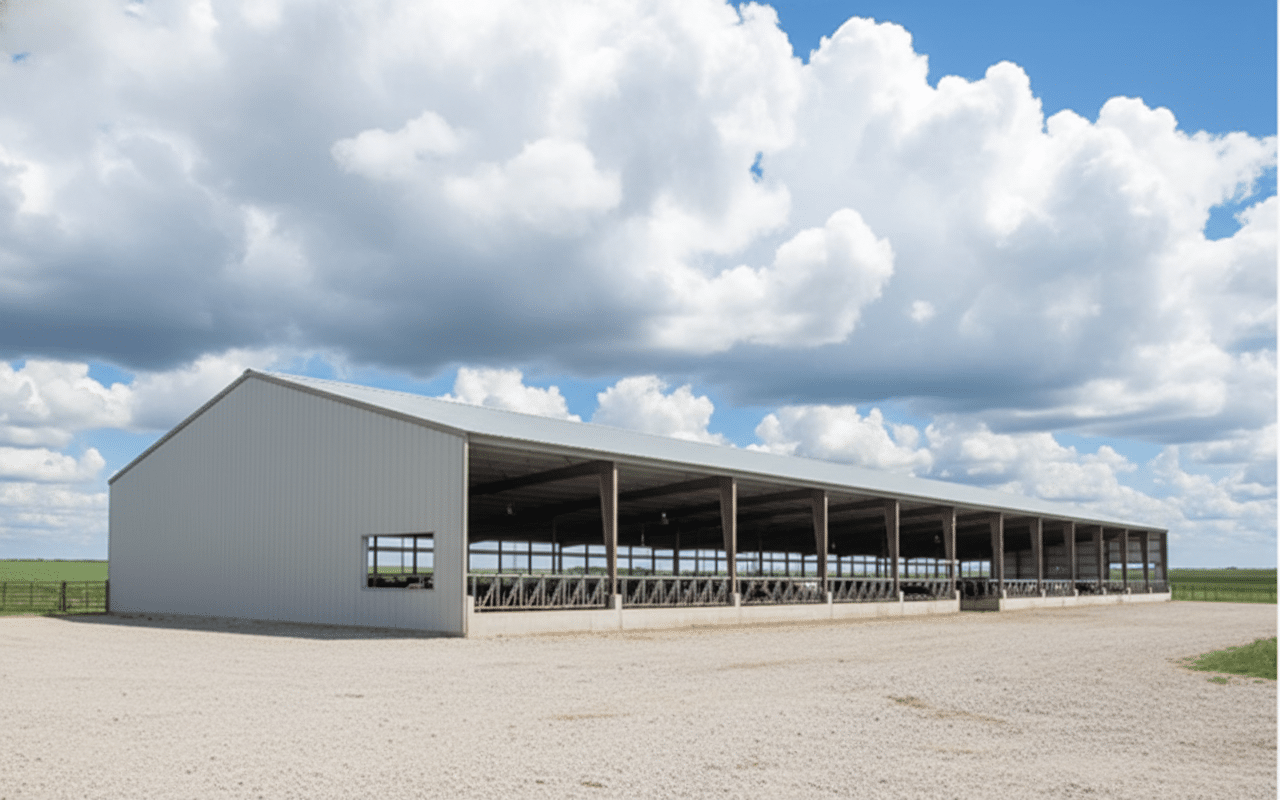
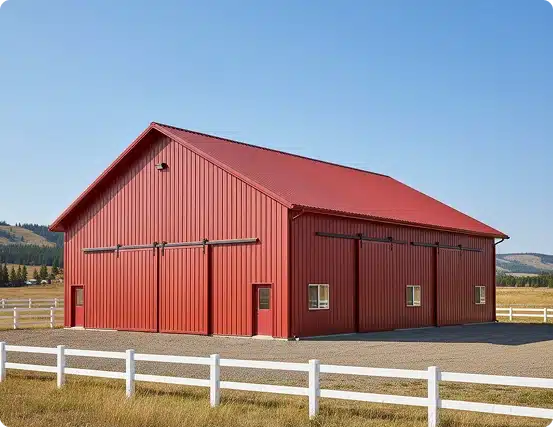
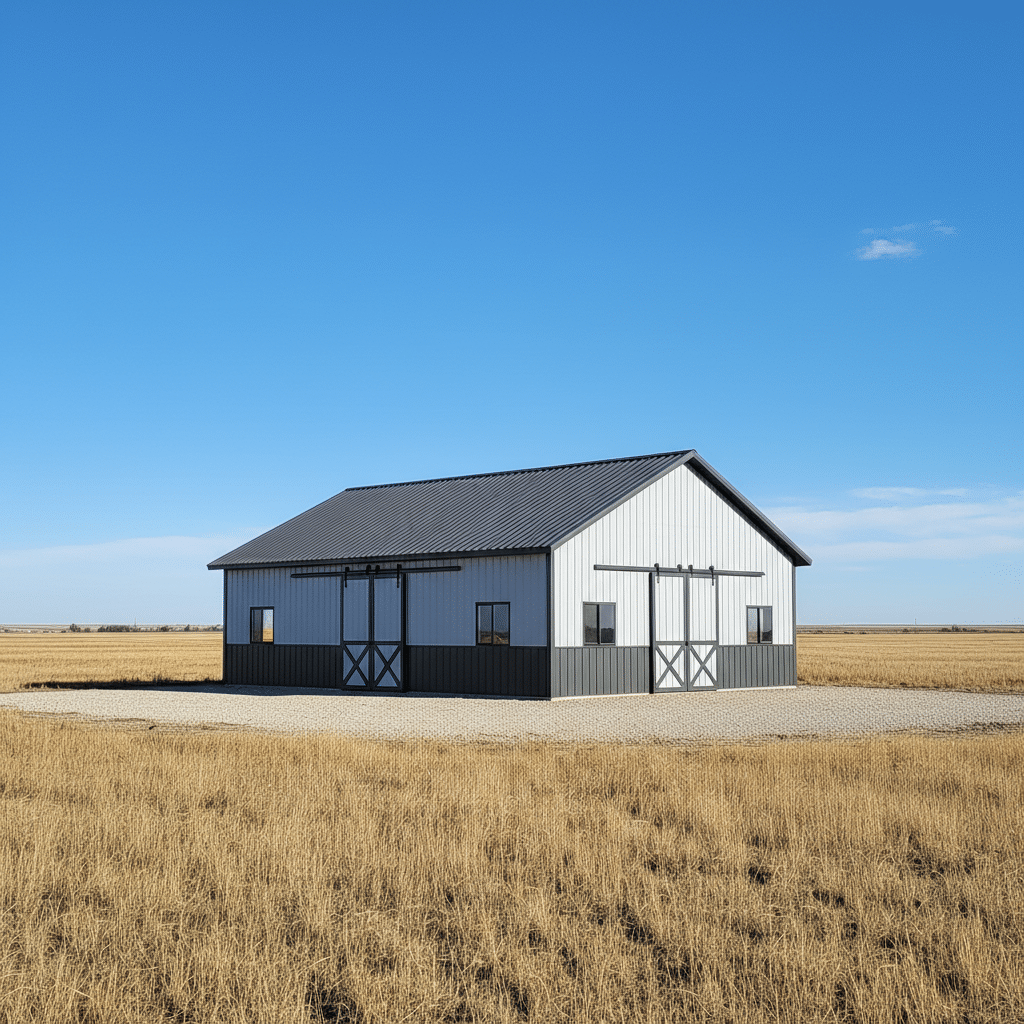
Horse riding arenas and horse shelters are unique. They’re unlike other post frame buildings used for residential or commercial purposes. Equestrian facilities typically fall into four broad categories, each with specific planning priorities.
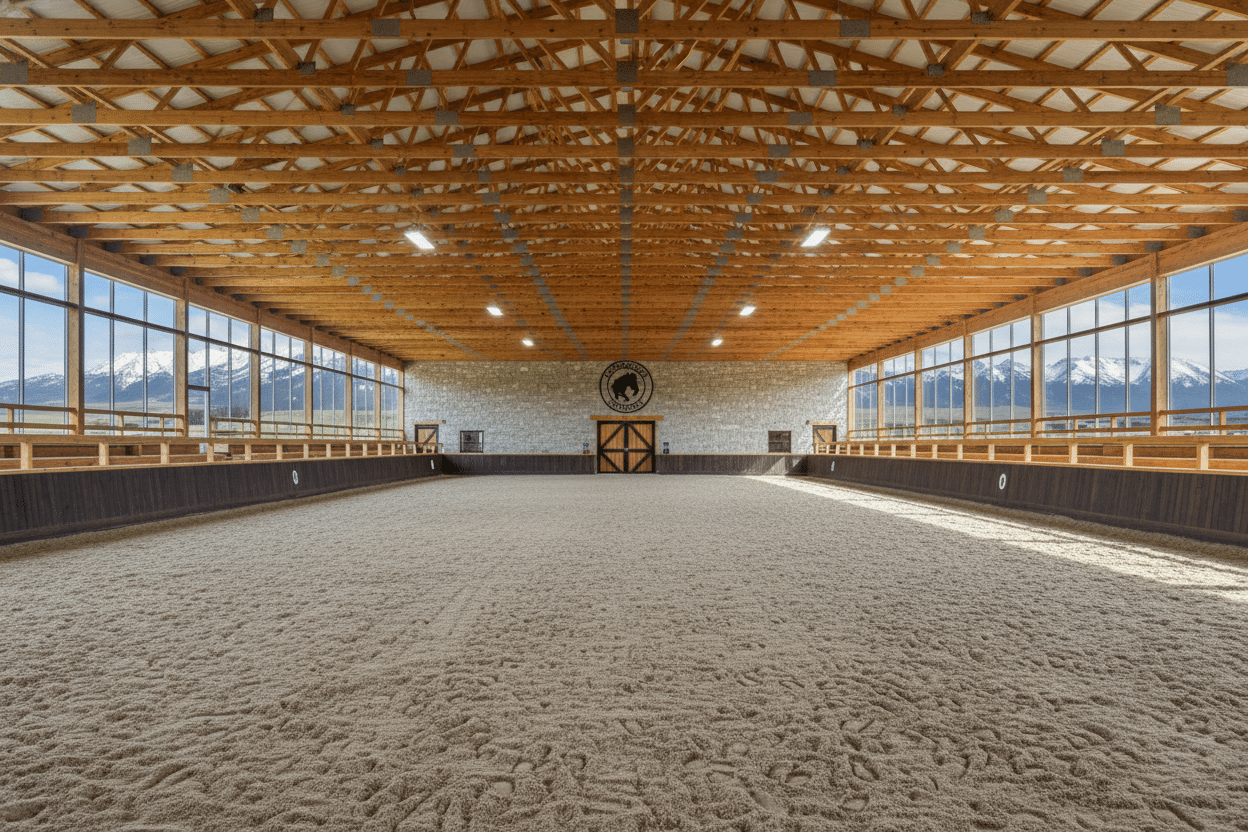
- Indoor riding arenas – Often the largest and most structurally-demanding post frame buildings, priorities for an indoor horse riding arena include open space, consistent footing conditions for the horses, and natural light.
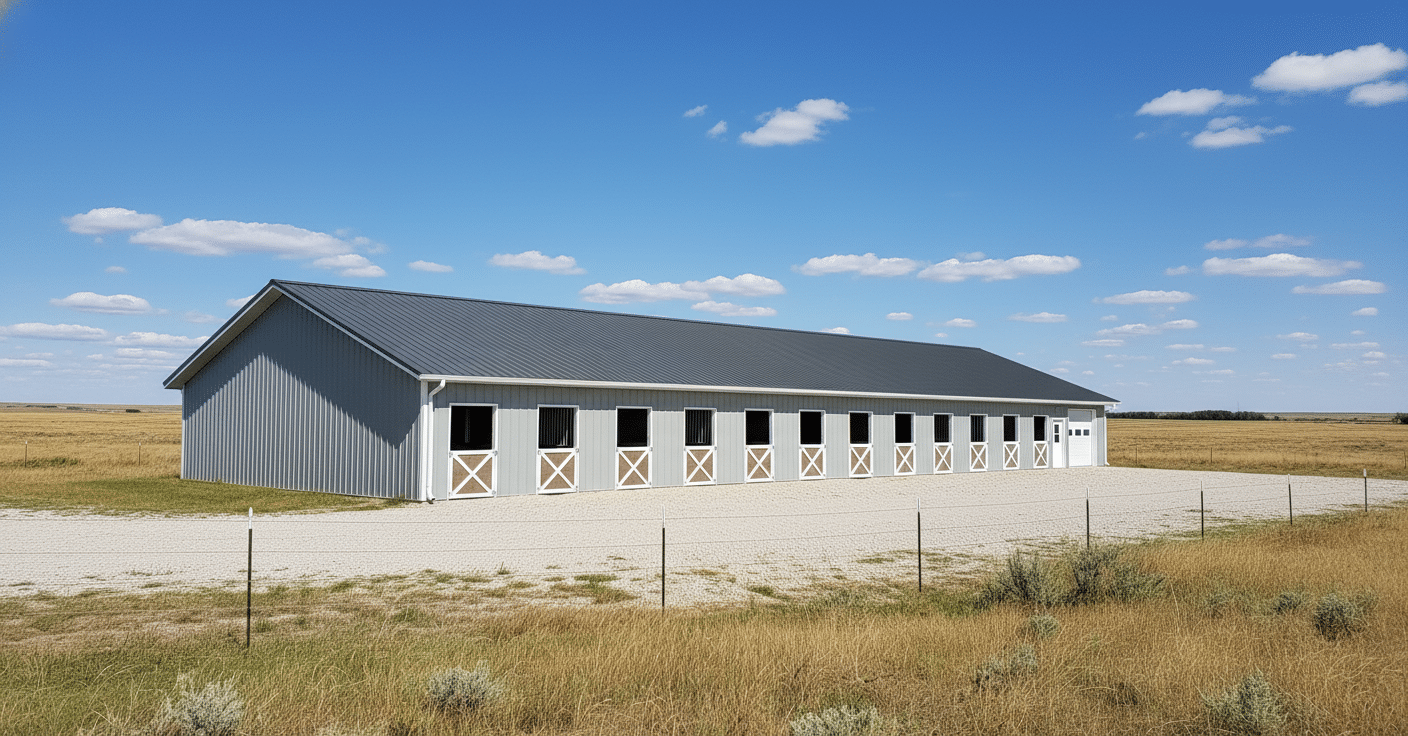
- Horse barns – Barns with stalls and support spaces (tack, feed, wash/utility areas, etc.) need dedicated stalls and good ventilation. It’s also important to have convenient access to feed, cleaning tools, and turnout equipment for an efficient workflow.
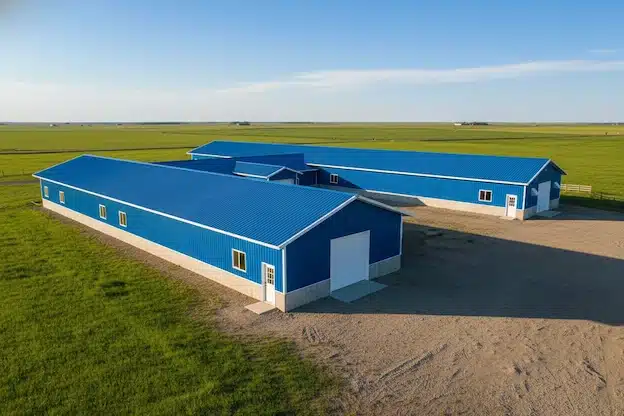
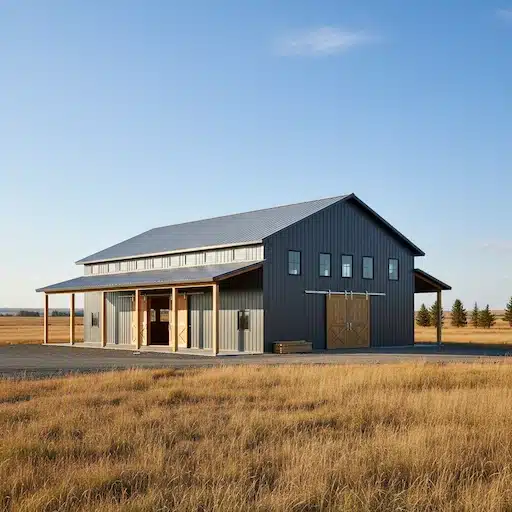
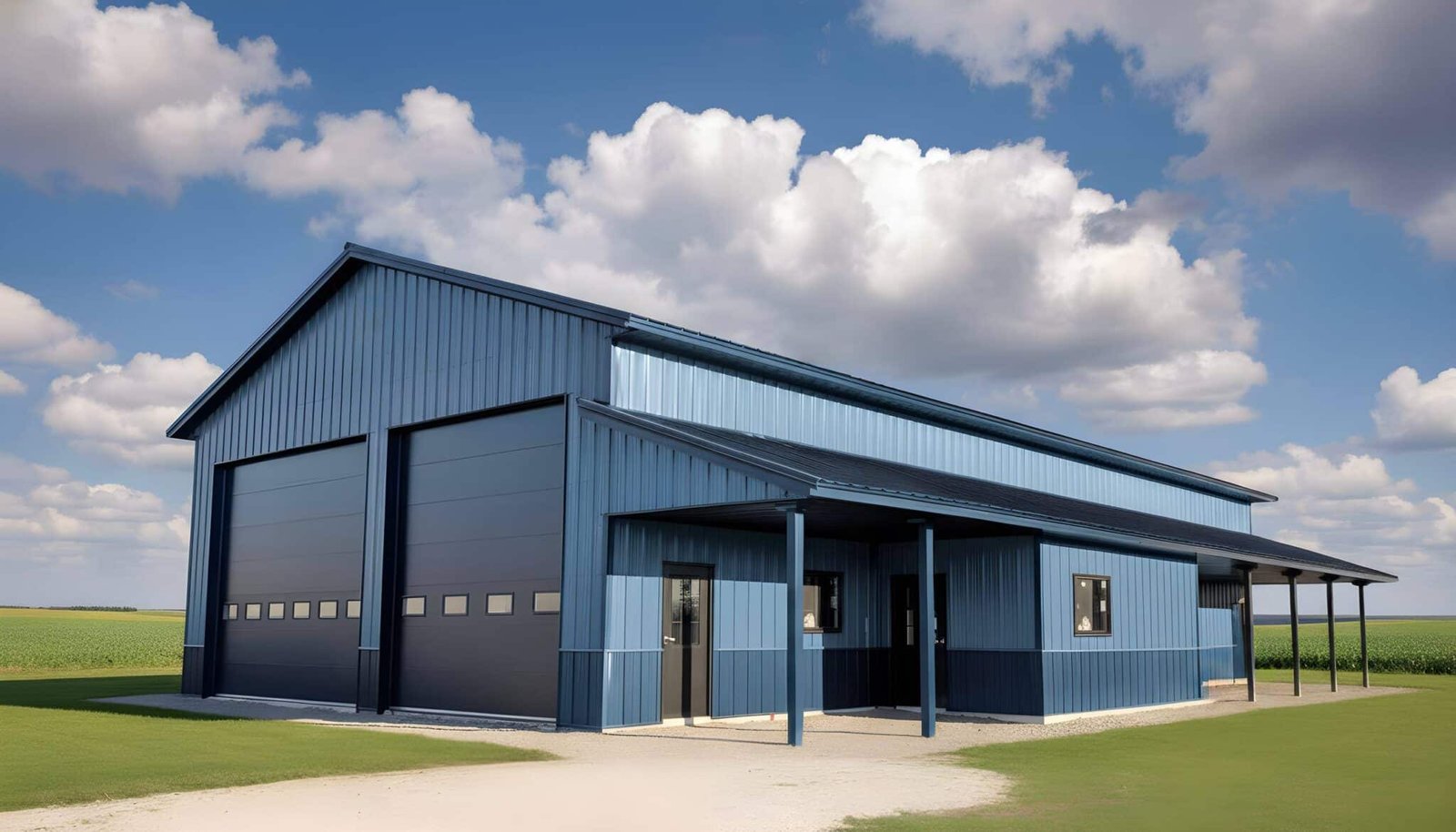
- Combined facilities – The ultimate in one-stop equestrian post frame construction, these facilities integrate all the essentials. That includes a horse riding arena and barn alongside maintenance areas like tack rooms, feed storage, and wash bays.
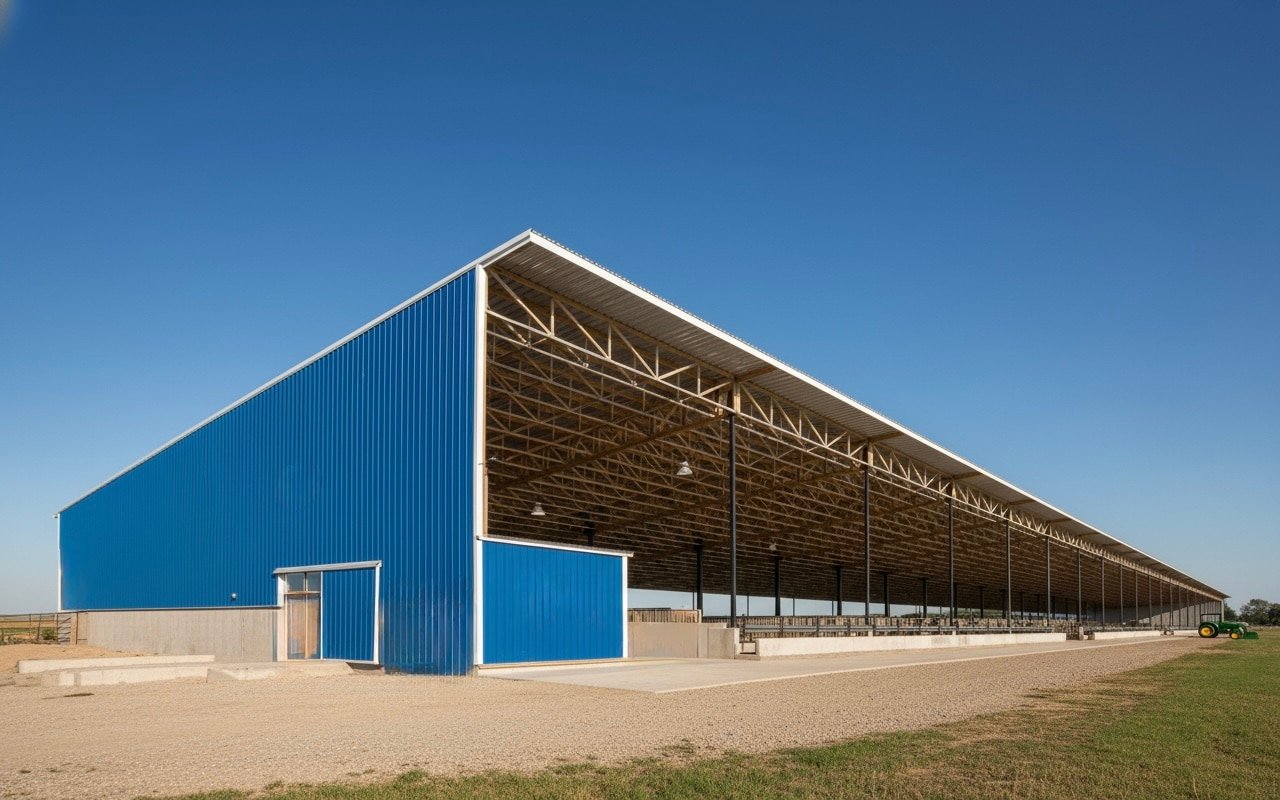
- Run-in shelters – These are basic facilities to protect horses without defined stalls and work well in a pasture environment.
Prioritizing Horse Comfort and Air Quality
At the end of the day, with post frame equestrian building construction, air quality and the comfort of the horses are of the utmost importance. These two factors are typically incorporated into the design to control ammonia and humidity and minimize dust.
A dry, well-ventilated post frame equestrian building protects horses, preserves footing quality, and significantly reduces long-term maintenance issues. So, effective equestrian post frame building designs focus on:
- Consistent airflow to maintain good air quality. This helps remove moisture and airborne contaminants without creating drafts for the horses.
- Ventilation systems tailored to the cold winters and warm summers in Canada (by region).
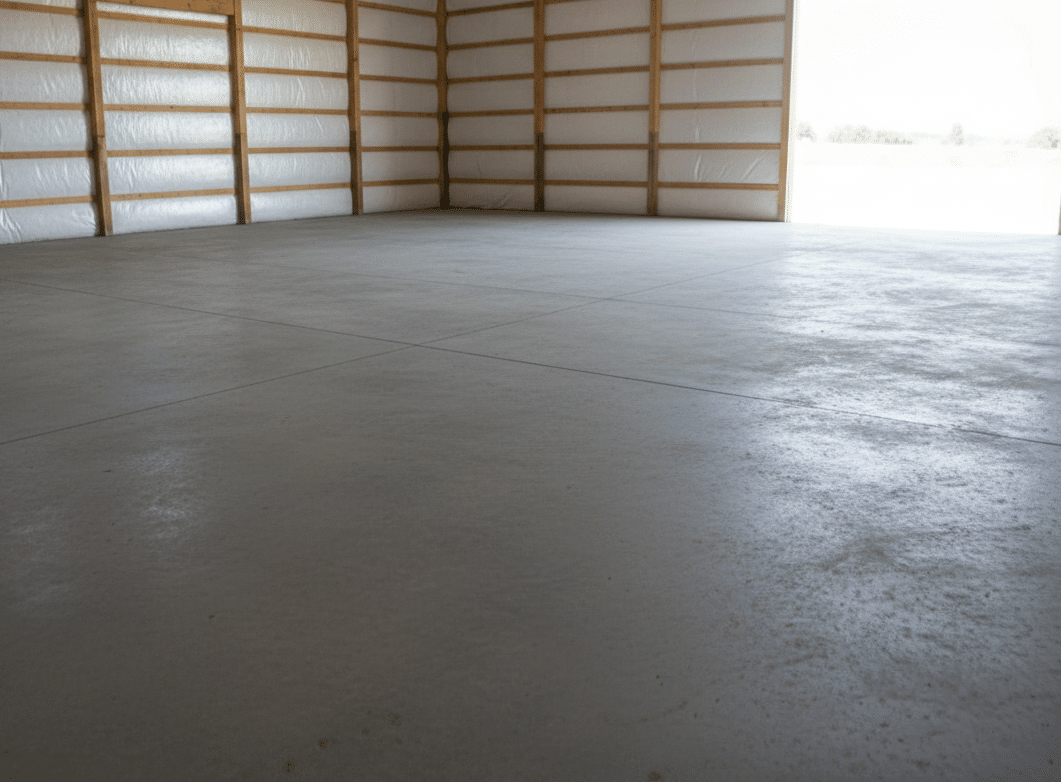
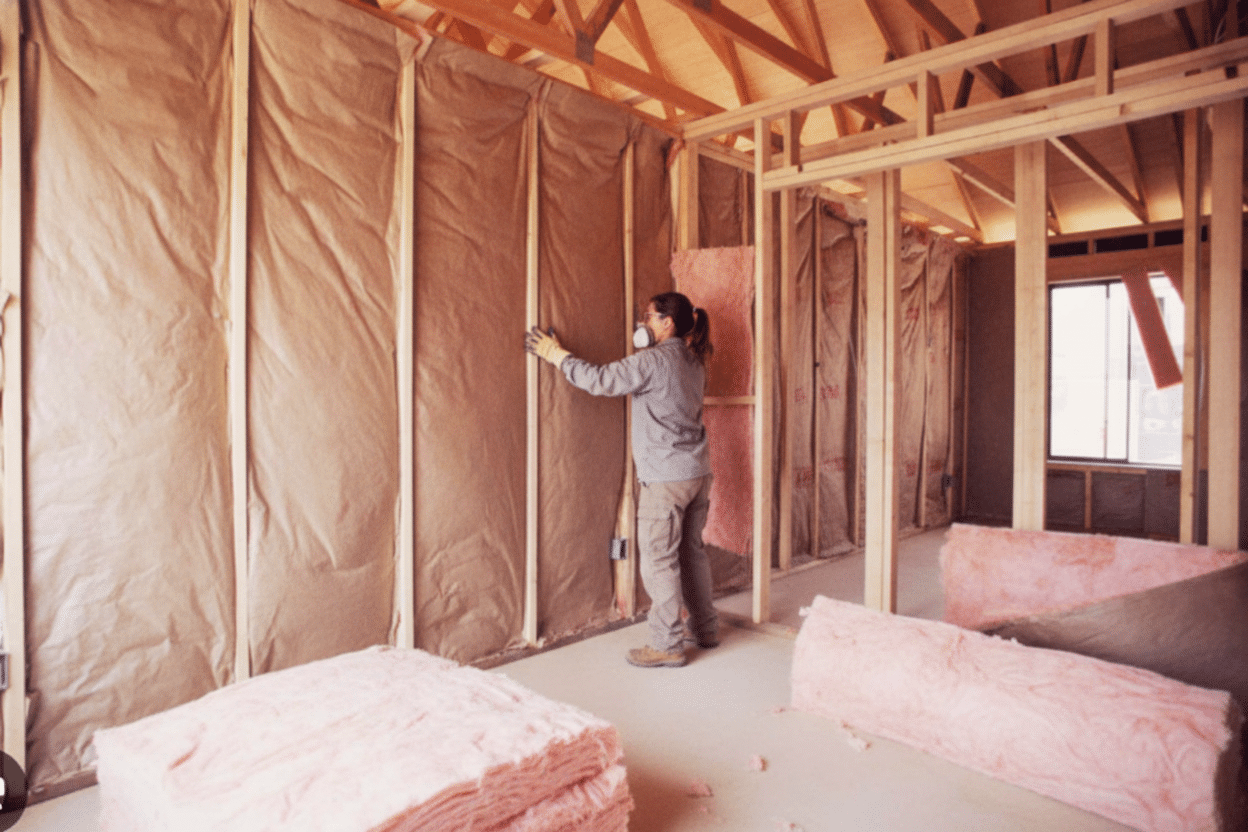
- Condensation control by managing internal moisture sources, providing an escape for moist air, and using a code-aligned air/vapour control strategy (including insulation where applicable).
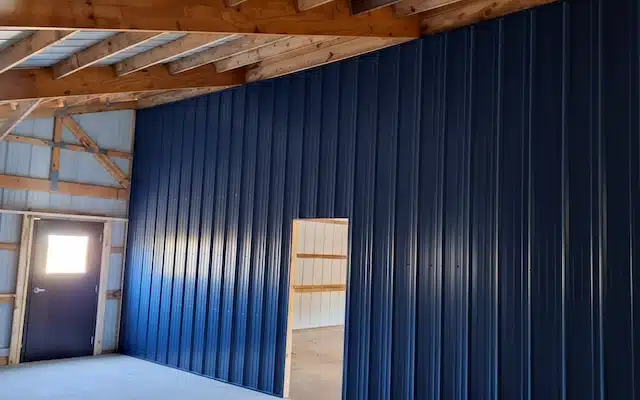
- Durability of all interior surfaces. They need to withstand high levels of moisture, horse bedding materials, and regular washing, and that doesn’t include the wear and tear from the horses themselves.
The Arena Essentials: Clear Spans, Good Height, and Lots of Natural Light
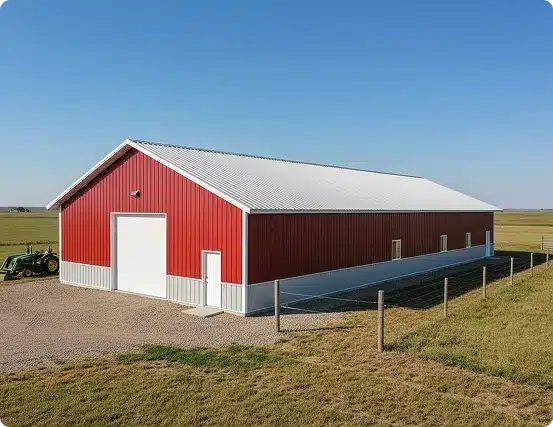
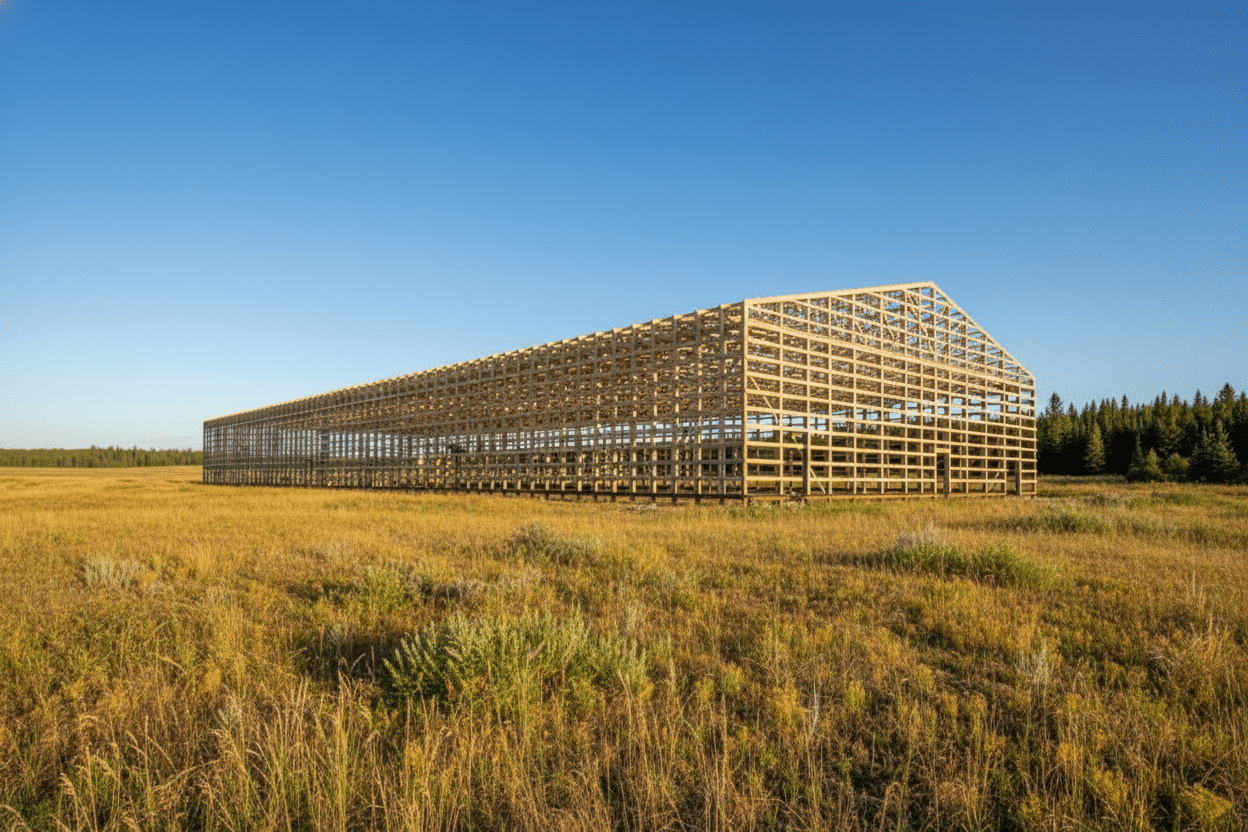
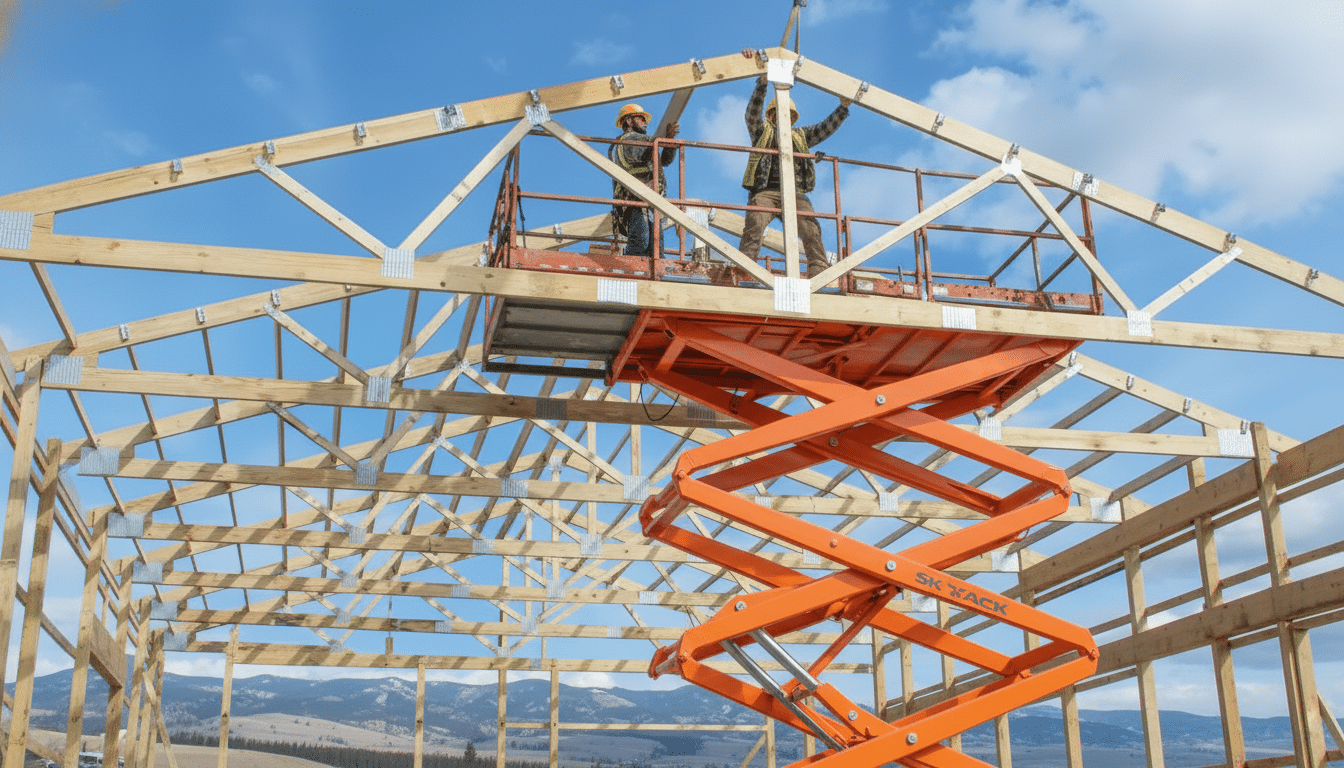
Picture an indoor riding arena, and you probably conjure up images of wide open spaces with lots of room to move around. And that’s one of the main reasons post frame construction is ideal for these structures. With fewer interior load-bearing walls and (often) no interior posts, depending on the design, there’s nothing to get in the way of training and riding.
Essentials for any horse riding arena include:
- Unobstructed interior span to allow full riding patterns.
- Ceiling height that takes into account jumps, dust dispersion, and light distribution.
- Natural light achieved through skylights, translucent panels, and even sidewall openings/curtains or large doors for when the weather is nice.
- An appropriate orientation that reduces glare for the horses and riders and even manages snow drifting based on typical wind patterns.
Focus on Safety and Durability
With horse barns, arenas, and combo facilities, the aim usually isn’t luxury. Instead, the goal is a reliable environment safe for both horses and riders. You need surfaces that can withstand near-constant use from hooves, boots, equipment, and machinery.
When making design selections, consider:
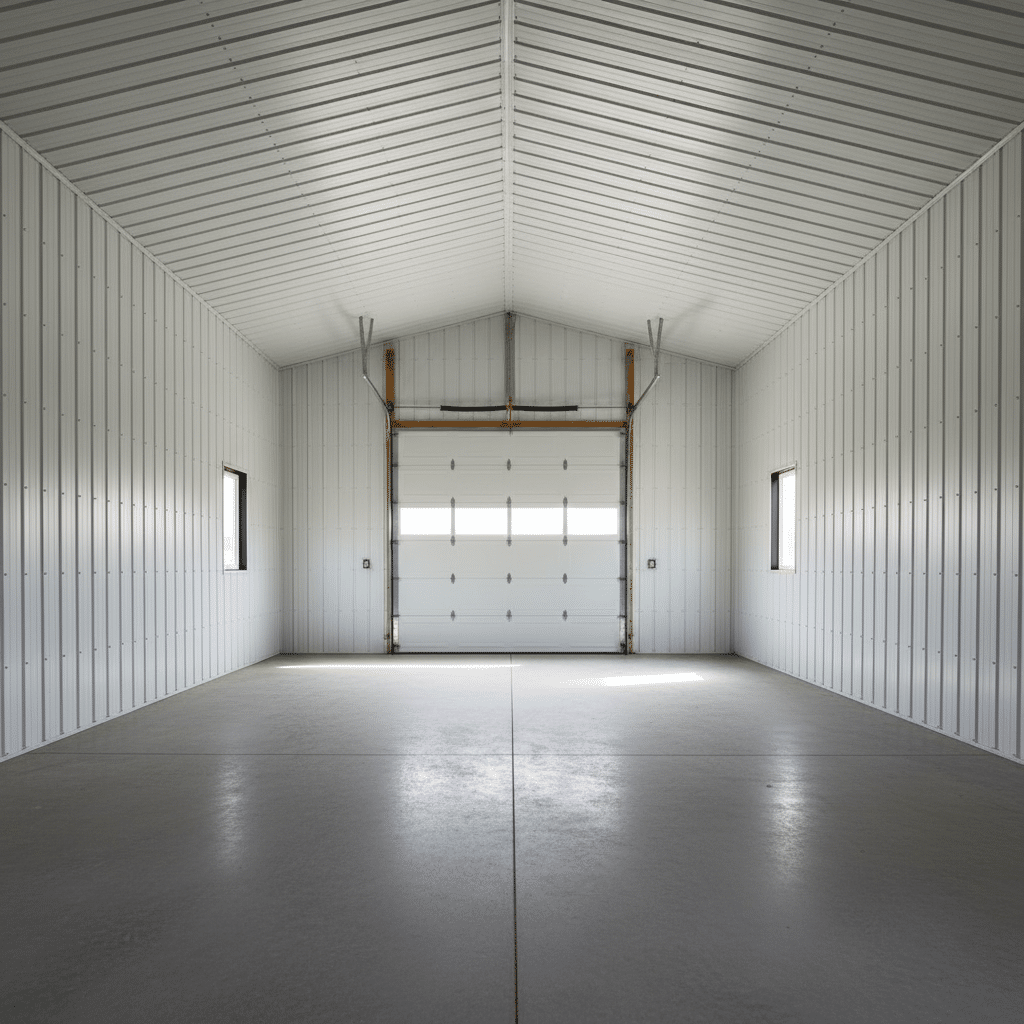
- Choosing solid interior surfaces that resist impact and splintering.
- A careful plan for the door layout to reduce congestion and sudden movements that might spook the horses.
- Opting for slip-resistant surfaces wherever there’s water use or high traffic.
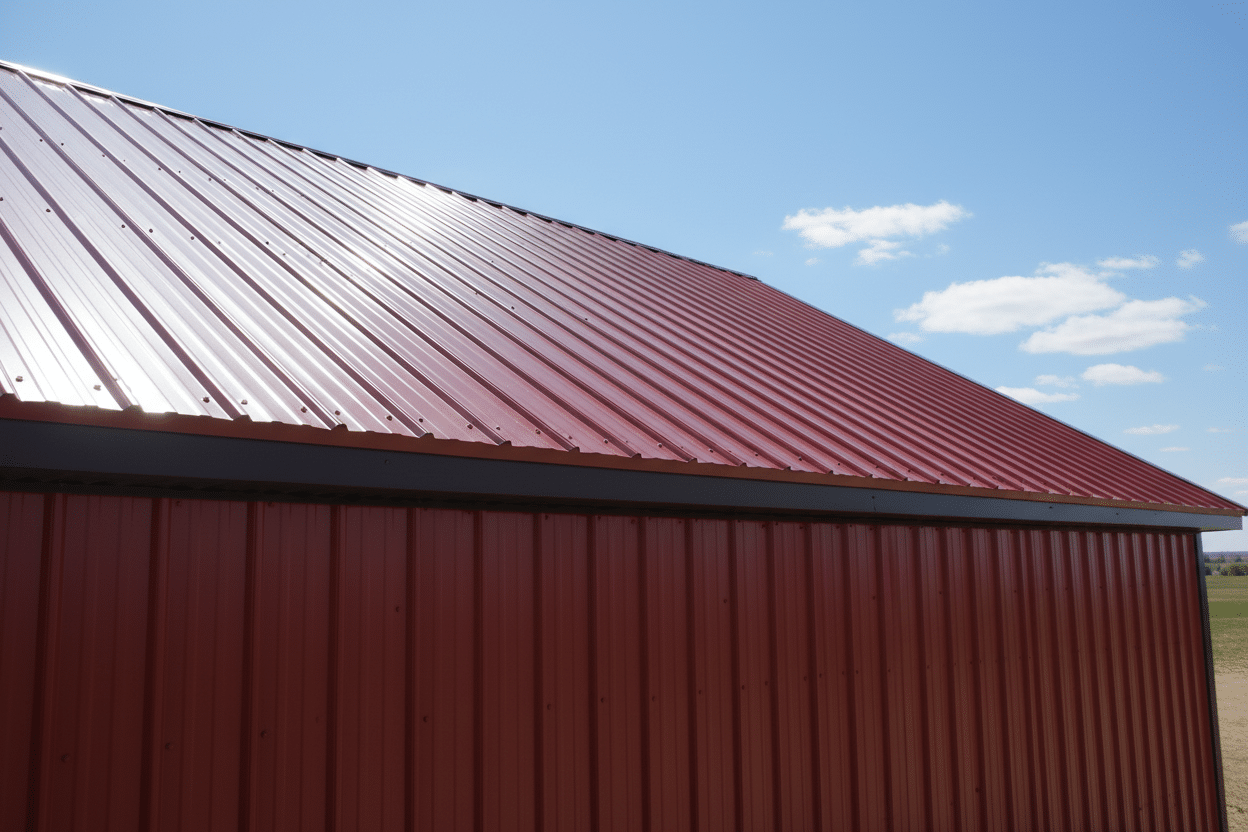
- Prioritizing materials that are easy to clean and maintain, as you might need in a garage or industrial setting.
Permits and Engineered Design for Large Post Frame Equestrian Buildings
When you have a large clear span without interior posts, you need precise engineering. That’s what ensures the structure can effectively deal with snow loads and high winds with consistent support.
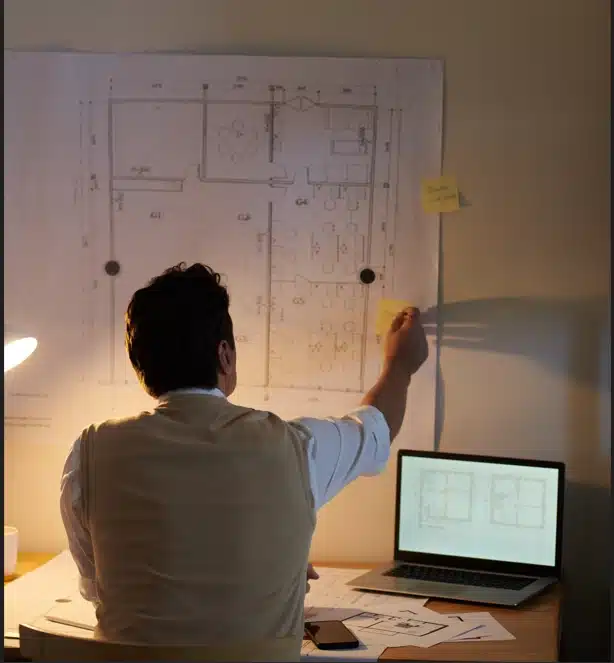
Engineered drawings confirm the structural integrity of the post frame building and are needed to get through the permitting process. With horse riding arenas, you may need development (land-use) approval and a building permit, depending on the municipality and land use before construction can begin. The drawings will confirm that:
- The roof and wall systems can safely carry the sometimes heavy Canadian snow loads.
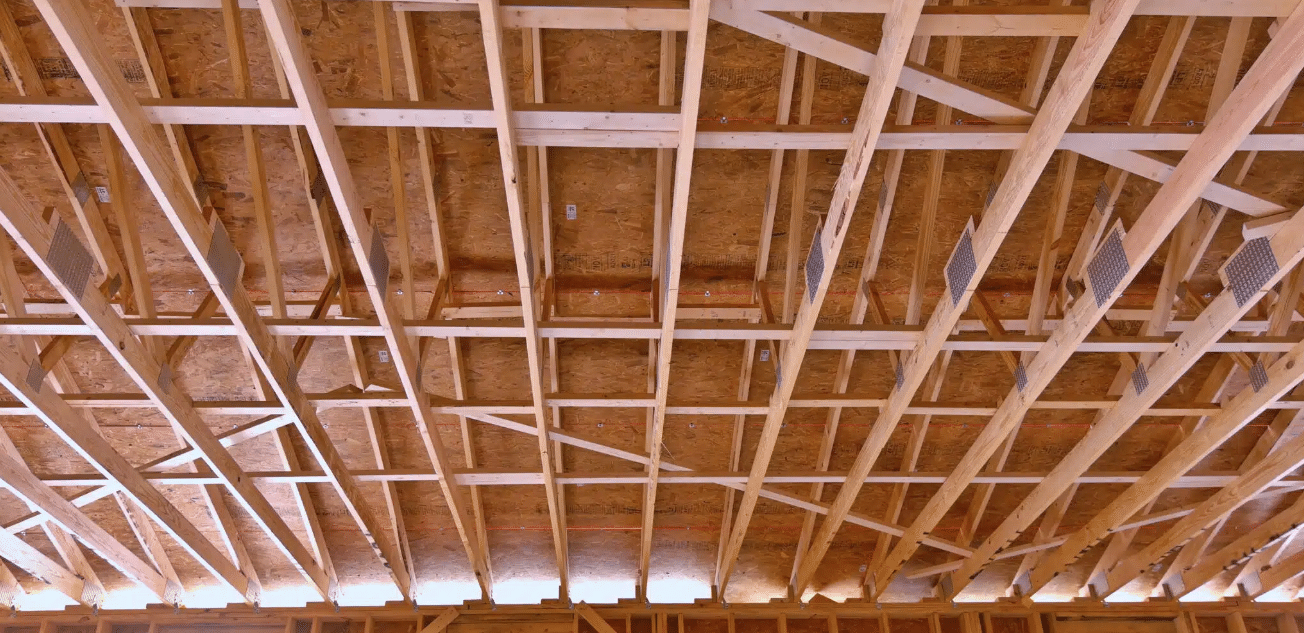
- Long-span trusses and frames remain stiff and stable under a heavy load.
- Load paths are continuous from the roof to the foundation.
- Columns, footings, and base connections are sized correctly.
Cost Drivers and Post Frame Equestrian Building Processes Explained
Indoor riding arena prices in Canada vary, as do the costs for horse barns, run-in shelters, and multipurpose facilities. These are the main contributors to the total:
- The size of the structure, including span, height, and purpose (basic run-in shelters are on the low end and combined arena-barns are on the high end).
- Door size and quantity.
- Size and quality of ventilation system.
- The inclusion of liners and vapour barriers.
- How easy the site is to access and build on.
What’s Involved in the Post Frame Building Process?
To get things right, you want to first drill down into the type of equestrian facility you need. Is an insulated horse barn enough? Or do you need a riding arena, too? Do you want these structures combined or kept separate?
Once you know the project type and your requirements, here’s the complete process:
- Check the permit requirements.
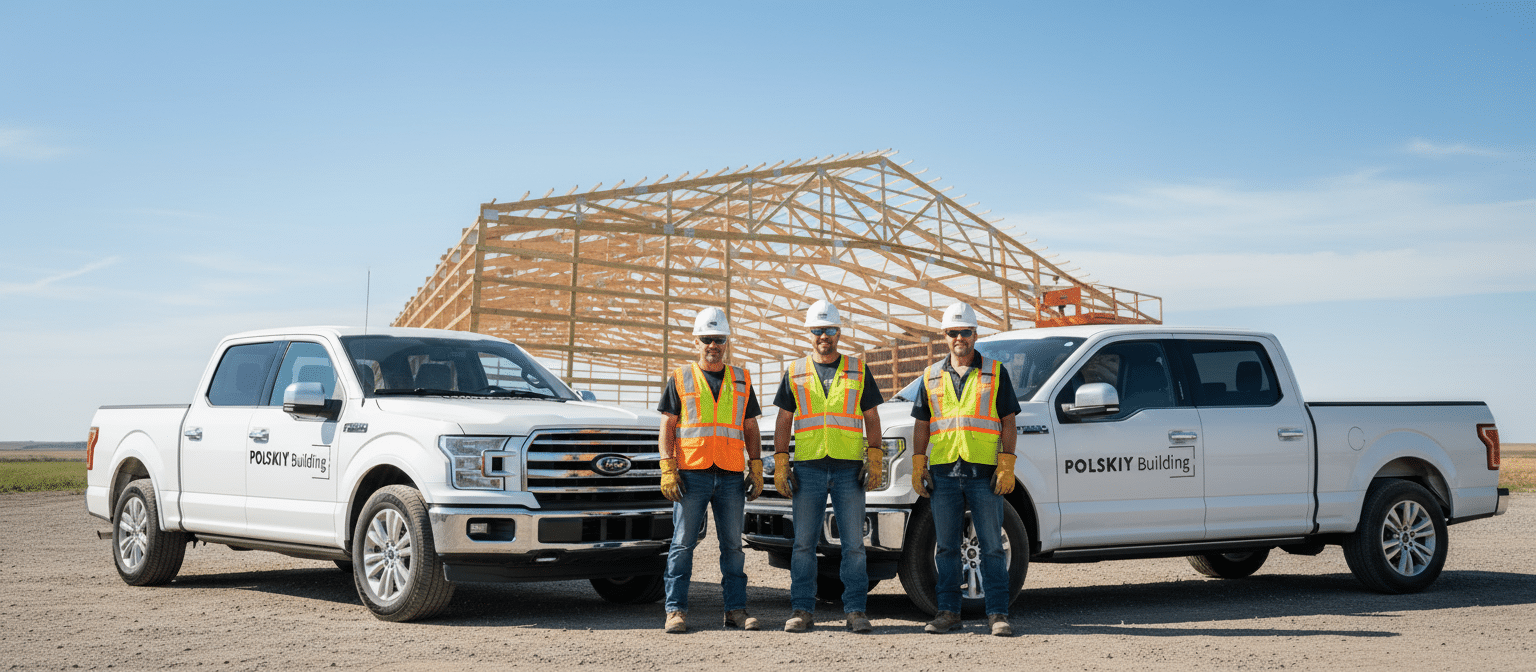
- Engage professional post frame builders to define the size and layout (a common starting point is around 60 × 120 ft for a private arena, but requirements vary).
- The official engineered drawings are created.
- Request your permits and wait for approval.
- Organize site preparation if needed.
- Install the engineered foundation system (often concrete footings/piers or slabs, depending on design and frost conditions).
- Install the structure (framing, trusses) and shell (siding, roof).
- Complete the interior fit-out, including the footing material.
How Long Does It Take to Build an Equestrian Post Frame Structure?
In general, a customized horse barn shell will take between 4 and 8 weeks to complete. On the other hand, a basic run-in shelter can often be completed in 3 weeks or less once permits (if needed), site prep, and materials are ready. For a large combo barn-riding arena with all the bells and whistles like insulation, ventilation, stalls, workshops, and wash bays, it can take 6 months or more.
What Can Delay a Post Frame Equestrian Building?
In Canada, one of the main challenges is the weather. Frozen ground can delay digging or the foundation pour. Delays can also happen due to last-minute changes, difficulties getting extra-large doors and other materials, or issues may arise during the initial permitting or after inspection.